How to Study a Book With AI
Use AI to support book study with source checks, better questions, your own explanations, and a workflow that keeps the original text in view.
Read guide
 ez-learn
Interactive book learning
Don't just get through a book. Work through what it teaches you.
It's easy to spend an hour reading and have very little sense of what you've learned. You followed the explanations. You turned the pages. But which ideas can you explain without looking back?
ez-learn makes reading a more active process. It guides you through manageable sections of your own book, asks questions as you go, and helps you follow the concepts you're learning. When you finish reading, there's still a way to check what has stayed with you.
Start studying freeFinishing fifty pages is progress, but it doesn't tell you much about what you understood.
You might recognize an idea the moment you see it in print and still have trouble explaining it to someone else. You might understand one chapter, only to forget a detail you need three chapters later.
Reading matters. So does stopping long enough to think about what you've read.
With ez-learn, those moments are part of the experience. You read, answer questions, explore concepts, and continue. You don't have to create a separate study routine before you can begin.
Upload a PDF and let ez-learn identify the main reading pages. If needed, you’ll be asked to choose a range. The material is analyzed and prepared in smaller sections, roughly sized for a short reading session.
Sections are prepared progressively. You can begin with the material that's ready while later sections are prepared in the background.
The point isn't to rush you through a fixed number of pages. It's to give you a natural place to stop, think, and keep going.
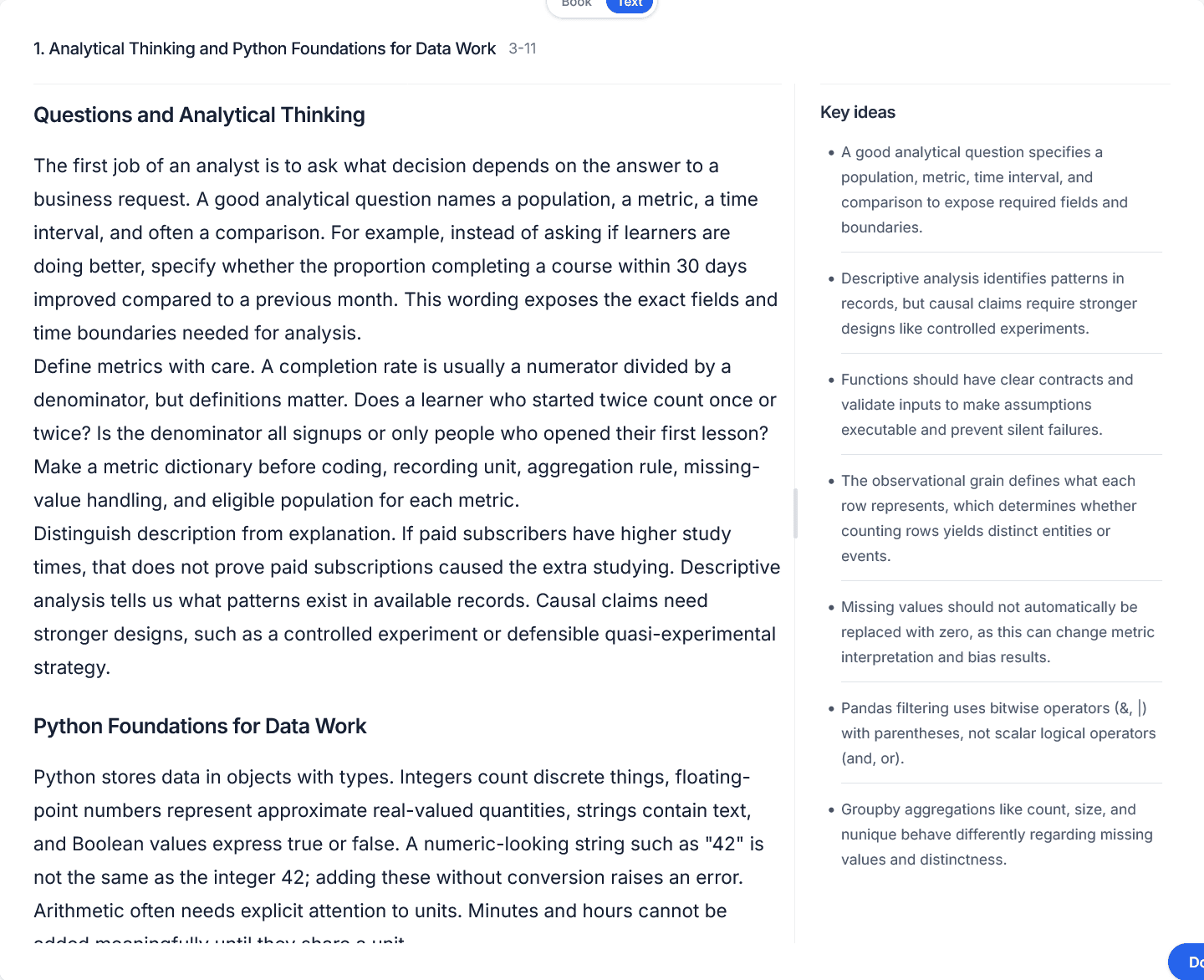
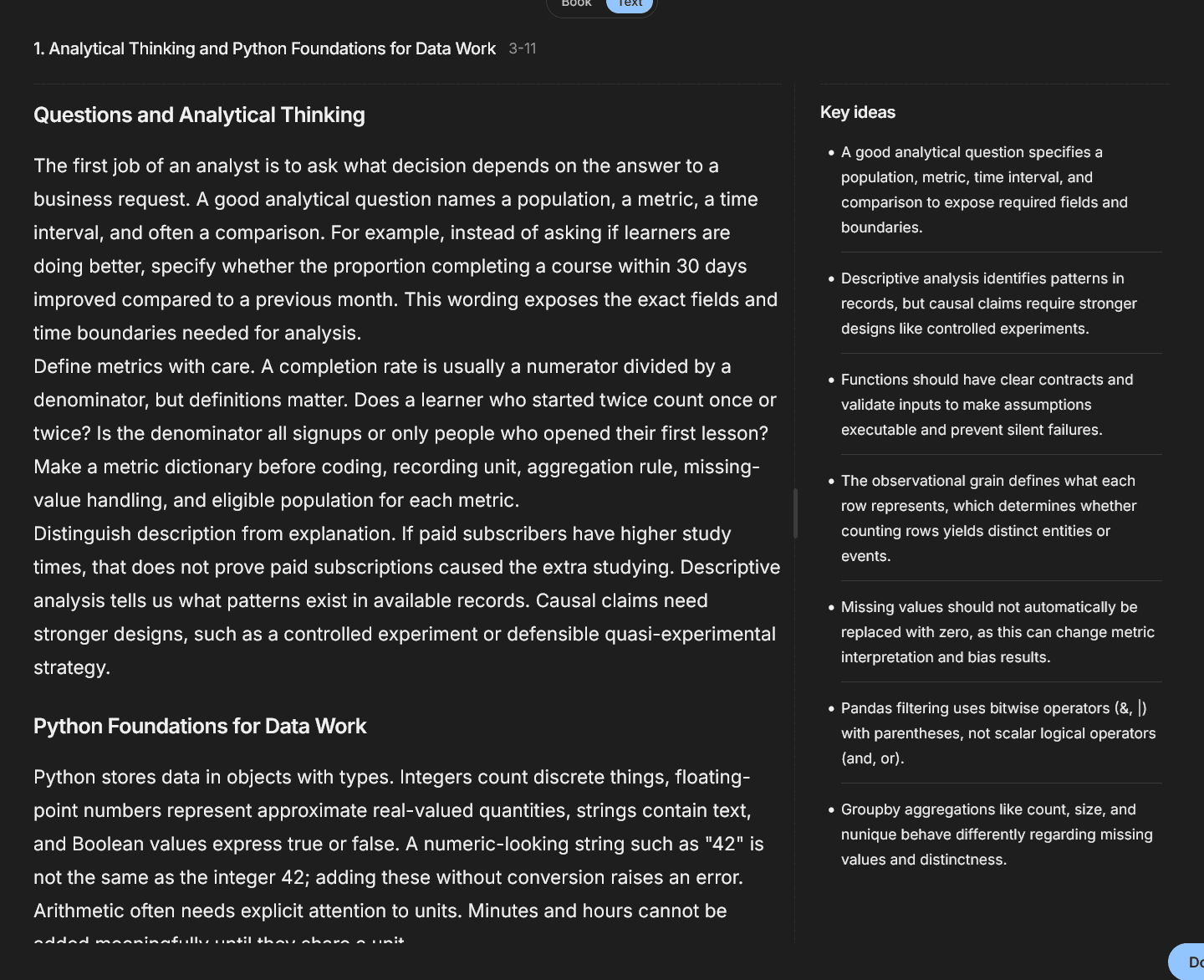
You can read the original book in the reader or switch to a cleaner section view with key ideas and prepared reading material.
Summaries can help you find your bearings, but they aren't a substitute for understanding the source. When something is unclear, you can return to the relevant pages and read it in context.
Your place in the book is saved, so picking up where you left off doesn't mean figuring out where you were last time.
After a section, ez-learn asks questions about the material you've just covered. You answer them before moving on to the next part of the reading journey.
Sometimes the question is straightforward. Other times it reveals that an explanation you recognized on the page is harder to recall on your own.
That's useful information. A missed question gives you something specific to revisit, rather than a vague feeling that you should probably read the chapter again.
As you read, ez-learn builds a knowledge map from the concepts in your book. New ideas appear, and existing concepts can gain more detail as later sections develop them.
You can inspect a concept, find its source context, and see your estimated mastery. Related ideas can be organized into groups, helping you look beyond individual pages and see more of the subject you're learning.
The map grows with your reading. It isn't a diagram made once and forgotten.
Questions after reading are a starting point, not the whole process.
On longer reading journeys, earlier concepts can return through review questions. Your answers also contribute to concept-level mastery estimates, giving you a clearer view of what needs more attention.
After finishing your reading range, take a short check and then a final exam when it becomes available. You can retake the final exam afterward and view your previous results. Maintenance checks and optional practice give you more ways to revisit the concepts you’ve studied.
You don't need to treat the last page as the last time you'll think about the book.
Some books are meant to be enjoyed and put back on the shelf. Others contain ideas you want to use again.
Maybe you're working through a university textbook, learning a technical subject, or reading nonfiction because you want to understand something properly. In each case, reaching the end is only part of the goal.
ez-learn is for that second kind of reading: the kind where you want to remember the ideas, understand how they fit together, and notice where your understanding is still incomplete.
You bring the book. ez-learn gives the learning process some structure.
1. Choose your book. Select the material you want to study and let ez-learn prepare the first sections.
2. Read a manageable section. Use the original reader or prepared section material, with the source available to check details.
3. Answer questions. Find out what you can recall before moving forward.
4. Explore your concepts. Follow the knowledge map and see which ideas need more work.
5. Return for review. Keep checking your understanding during reading and after finishing the book.
Instead of only reading from beginning to end, you regularly respond to the material. In ez-learn, that means answering questions after sections, revisiting earlier ideas, and exploring the concepts that develop throughout the book.
No. The original material remains part of the reading experience. Prepared reading material, key ideas, and summaries help you work through it, but you can return to the source when you need context.
No. ez-learn generates questions from the sections you're studying. Questions are built into the reading flow, with additional review and practice opportunities as you progress.
Not necessarily. ez-learn prepares sections progressively. You can start reading once the first section is ready, while the next parts are prepared as you move through the book.
Yes. ez-learn can work with different kinds of books, including explanatory, procedural, and narrative material. What you get depends on the source and the selected content.
A finished book is satisfying. Being able to explain what you learned from it is better.
ez-learn brings reading, questions, concepts, and reviews into one experience, so you can do more with the books you spend time on.
Start studying free