How to Remember What You Read
Remember more from books with a reading routine built around clear questions, your own explanations, useful notes, and a second visit.
Read guide
 ez-learn
Active recall
Read your textbook. Actually remember what you learned.
Finishing a chapter doesn't always mean you've learned it. You might understand everything while reading, only to struggle when you try to explain it later.
That's where active recall comes in.
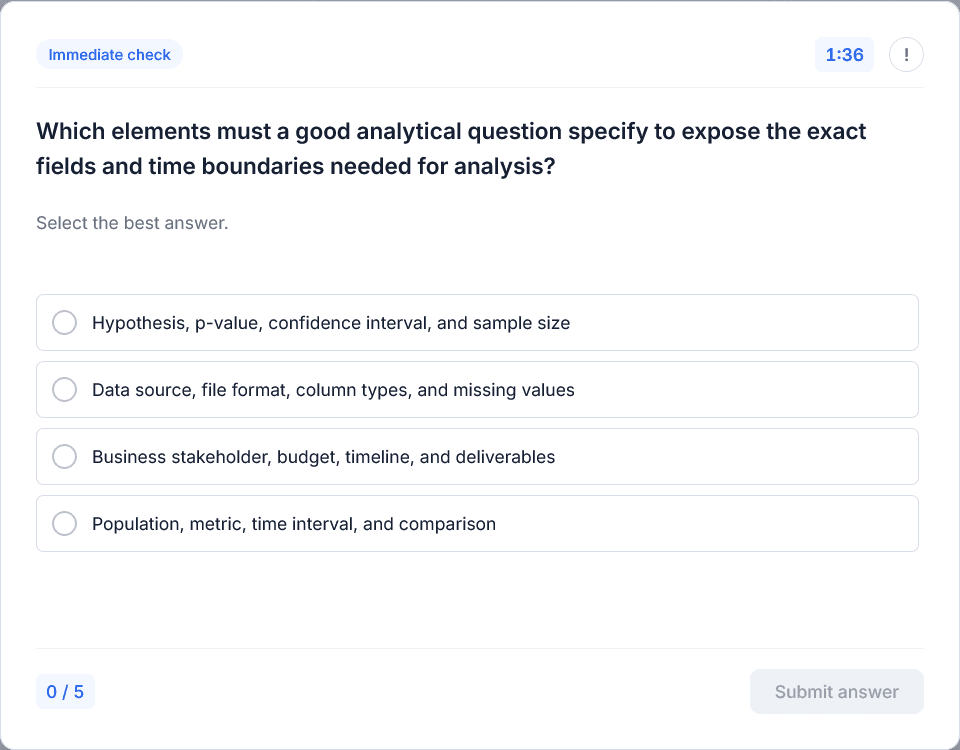
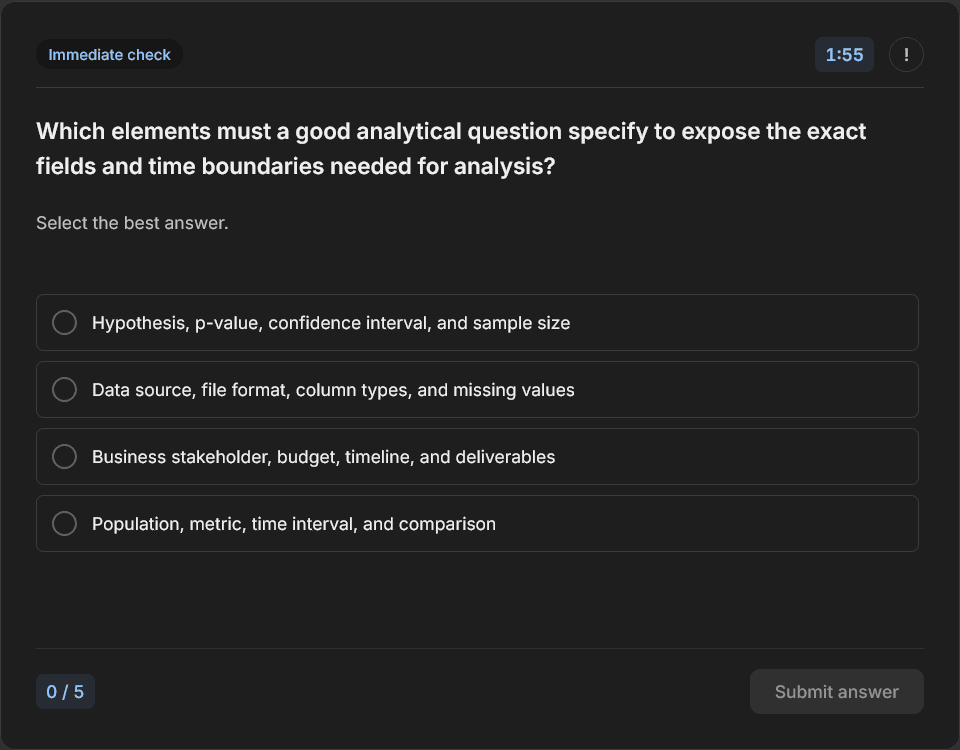
ez-learn brings active recall directly into your reading experience. Questions after each section, concept-level progress tracking, and personalized reviews help you find out what you actually know, without having to build your own study system.
Start studying freeRereading a passage can make information feel familiar. You recognize the terms, remember seeing the explanations, and feel more confident about the material.
But recognizing something on a page is different from remembering it without the page in front of you.
Active recall is the practice of retrieving information from memory instead of reviewing it passively.
After reading about a concept, you might try to explain it without looking, answer a question about it, or apply it to an unfamiliar example.
That effort matters.
Research on retrieval practice has found that actively recalling information can improve long-term retention compared with repeatedly studying the same material.
The difficult part is doing it consistently. Most people don't want to spend their study sessions writing questions, organizing answers, and deciding what to review next.
With ez-learn, those steps become part of reading.
Upload your PDF and start reading.
ez-learn organizes the selected material into manageable sections, so you can work through your book without having to decide where to stop.
When you finish a section, you'll answer questions based on what you've just read.
Instead of moving forward simply because you've reached the end of a page, you get an opportunity to check whether the important ideas stayed with you.
Questions are generated automatically, so you can focus on learning rather than preparing your own quizzes.
Getting through a chapter is one kind of progress. Understanding its individual concepts is another.
ez-learn tracks your estimated mastery of concepts on a scale from 0 to 5.
As you answer questions, your results help update your understanding of each concept. Some ideas may become familiar quickly. Others might need several attempts before they start to stick.
You can inspect your concepts, see their current mastery, and identify areas that need more practice.
These scores aren't a guarantee that you've mastered something. They're a way to make your learning progress more visible and help guide your reviews.
A correct answer today doesn't guarantee you'll remember the same information a week from now.
That's why ez-learn doesn't stop asking questions once you've finished a section.
During longer reading sessions, previously studied concepts can return through review questions. The system considers your progress and which concepts need attention when selecting material for review.
After finishing your reading range, take a short check and then a final exam when it becomes available. You can retake the final exam afterward. Maintenance checks and optional practice help you keep revisiting what you’ve learned.
You can also continue practicing concepts you've studied.
The idea is simple: revisit information when it needs attention instead of repeatedly reviewing everything from the beginning.
Active recall is more useful when the questions relate directly to what you're trying to learn.
ez-learn works with your own PDF textbooks and books, rather than relying on a generic collection of study questions.
Each reading section is connected to the material it came from. Questions are associated with concepts, and those concepts become part of an evolving knowledge map.
As you progress, the map develops alongside your understanding of the book.
You can explore individual concepts, see where they appeared in the source, and revisit the material when something isn't clear.
Reading, practice, and progress tracking all happen around the same content.
In a 2006 study, researchers Henry Roediger and Jeffrey Karpicke compared repeated studying with retrieval practice.
Students who practiced retrieving information remembered more on delayed tests than students who spent additional time studying the material.
This finding is part of a broader body of research on the testing effect: retrieving information can strengthen learning, rather than merely measure what someone already knows.
That doesn't mean rereading is useless. Sometimes you need to return to an explanation, work through an example, or review something you didn't understand.
The difference is that active recall gives you a way to check your knowledge before deciding what to study again.
With ez-learn, that check is built into the reading process.
1. Upload your book
Upload a PDF. ez-learn identifies the main reading pages automatically and asks you to choose a range if needed, then analyzes the material and prepares your reading sections.
2. Read at your own pace
Work through the original PDF or use the prepared reading material. Sections are organized into manageable reading sessions.
3. Check your understanding
Answer questions after reading each section. See how well you can recall what you've just learned before continuing.
4. Follow your progress
Explore the concepts you've encountered, inspect your knowledge map, and see which areas need more attention.
5. Keep what you've learned
Return to previously studied concepts through reviews and continue consolidating your knowledge after finishing the book.
Active recall is a learning technique that involves retrieving information from memory without looking at the answer. Answering questions, explaining concepts from memory, and testing yourself after reading are all ways to practice it.
Yes. ez-learn generates questions from your selected PDF material as you progress through the book. Questions are integrated into the reading process, with additional practice and reviews available as you learn.
No. ez-learn is a guided learning system built around books. Instead of managing separate flashcard decks, you read your material, answer questions, track concepts, and revisit what you've learned within the same learning experience.
Yes. Active recall is useful when you need to remember information and apply what you've studied. With ez-learn, you can work through textbook material, check your understanding after sections, and revisit concepts that need more practice.
No. You still need to read and understand the material. Active recall complements that process by helping you check what you remember and identify areas that need another look.
Your books contain the information. What matters is how much of it stays with you.
ez-learn helps you read with purpose, check your understanding, and return to the concepts that need more attention.
Start studying free