How to Create a Concept Map From a Textbook
Build a textbook concept map with a worked food-web example, labeled relationships, source checks, and questions you can use for study.
Read guide
 ez-learn
Knowledge maps
See how the ideas in your book fit together.
It's easy to remember a few points from a chapter and still lose track of the bigger picture. A new term appears, an earlier idea comes back, and suddenly you're trying to hold the whole book in your head.
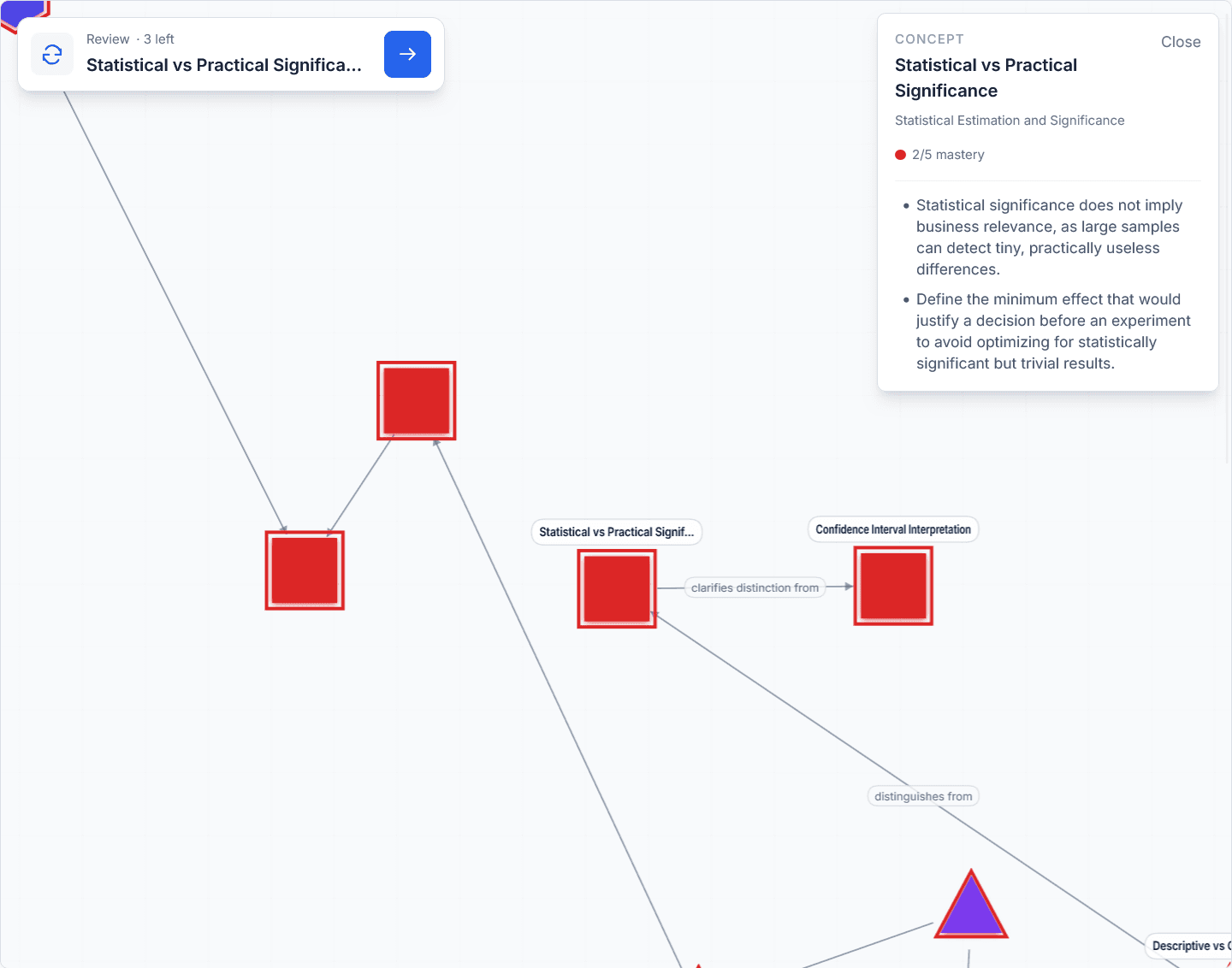
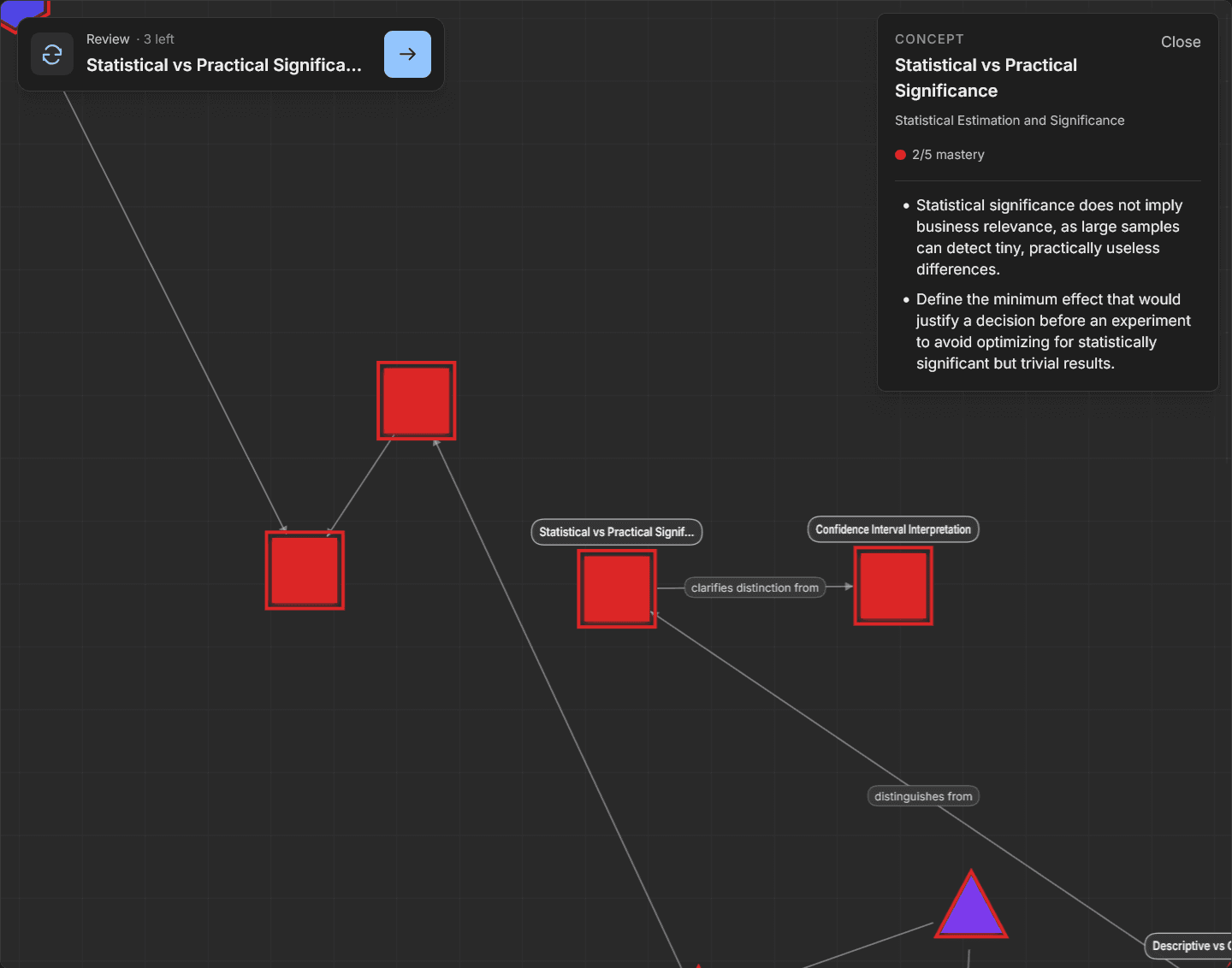
ez-learn builds a knowledge map as you read. Concepts appear as you encounter them, develop as the book adds detail, and become easier to revisit when you need another look.
Start studying freeBooks build on themselves. An idea introduced early on can become important much later. Two concepts that seem unrelated at first may turn out to explain the same process from different angles.
Keeping track of those connections takes work, especially in a long or difficult book.
With ez-learn, you don't have to start from an empty diagram or manually organize every new concept. The knowledge map develops alongside your reading, giving you a place to explore what you've covered and how the material is taking shape.
As you finish each reading section, ez-learn identifies important ideas from the material and updates the book's concept collection.
Some concepts are new. Others build on something you encountered earlier. The system can expand existing concepts rather than creating a separate entry every time an idea returns.
That means your map reflects a book you're actually working through, not just a one-time diagram made before you've read it.
A name on a map isn't much use if you can't remember what it means.
Open a concept to see its information, where it appears in the book, and related material. You can return to the source when an explanation needs another read.
As you progress, related concepts can be organized into groups. Once the selected reading is finished, the completed map can also show meaningful links between concepts.
The result is a way to navigate the knowledge in a book without treating every idea as an isolated fact.
Understanding the structure of a subject and remembering its details are different challenges.
ez-learn connects concepts to your questions and practice. As you answer, it updates an estimated mastery score for the concepts involved, from 0 to 5.
You can use those estimates to spot ideas that need review, then explore the relevant concepts and return to the reading when necessary.
The map isn't a certificate of mastery. It's a view of what you've encountered, how ideas relate, and where you may need to spend more time.
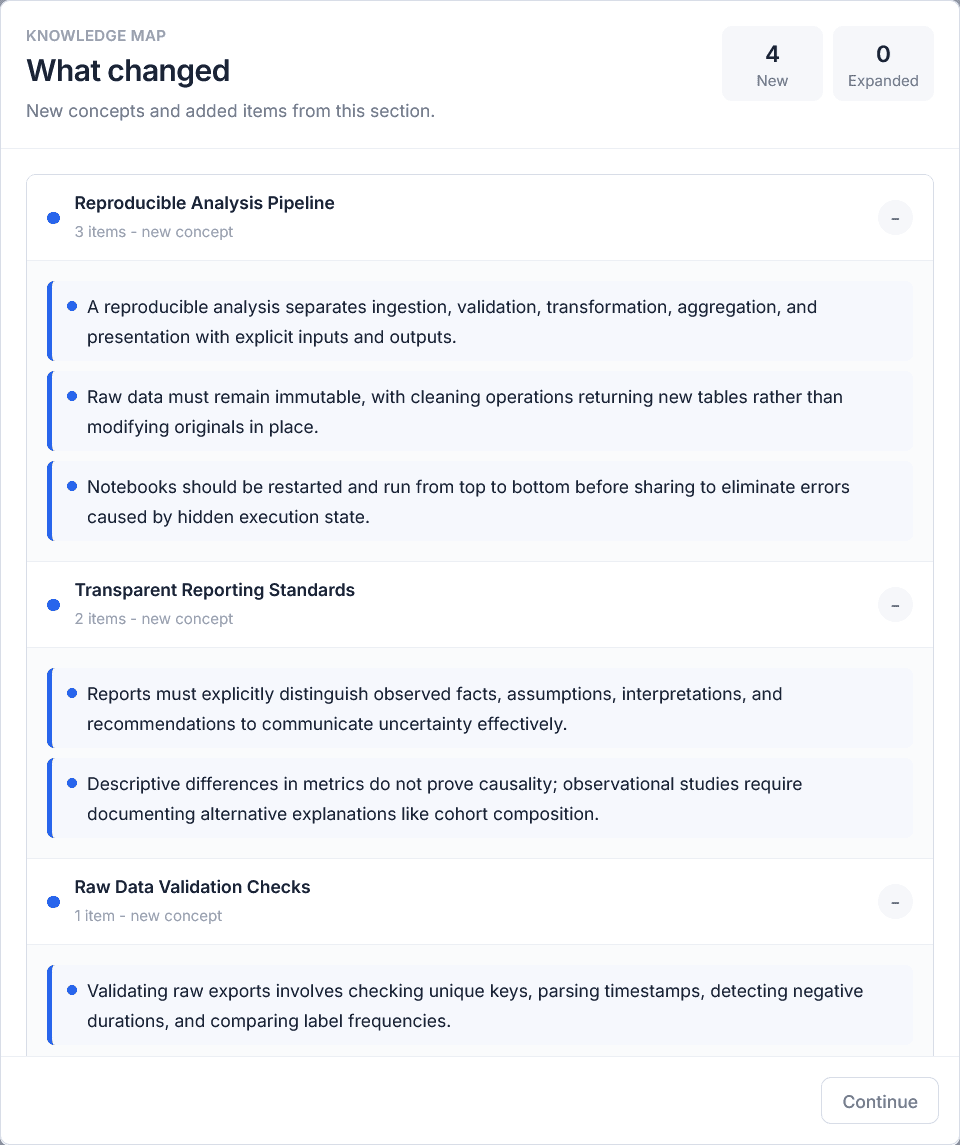
Traditional mind maps often begin with a blank canvas. You decide what to include, where to place it, and which ideas belong together.
That can be useful. But it can also become another task on top of reading, taking notes, and studying.
ez-learn takes a different approach. It builds the concept structure from the book as you move through it. You spend your time reading, answering questions, and exploring the ideas instead of maintaining a diagram by hand.
And because the map belongs to the same learning experience, you can move between concepts, the original material, and your review activity without rebuilding the context each time.
1. Add your book
Choose the material you want to study. ez-learn begins preparing it in reading sections.
2. Read and answer questions
Work through the material and check your understanding before moving on.
3. Watch your concept map develop
See which concepts are introduced or expanded as you complete sections.
4. Explore the connections
Open individual concepts, inspect their source context, and explore groups and relationships as they become available.
5. Return to what matters
Use concept-level progress and review activity to find ideas that need another look.
A knowledge map is a way to organize concepts and show how they belong together. In ez-learn, it grows from the material you read, with details and source context attached to individual concepts.
No. The map develops progressively as reading sections are prepared and completed. Some grouping and concept relationships are added later, including after you finish the selected material.
Yes. Concept details can include source pages and context, making it easier to return to the original explanation.
Not exactly. ez-learn isn't a blank-canvas diagram tool. Its map is part of a guided learning experience built around your book, with concepts that evolve as you read and connect to your learning progress.
You shouldn't have to choose between making progress through a book and keeping track of what it all means.
ez-learn helps you do both. Read the material, explore the concepts, and come back to the ideas that deserve more attention.
Start studying free